Event Details
About three decades ago, the Northern part of Uganda especially the Acholi and Lango Sub- Regions were plunged into war that lasted for about two decades. “In 2006, northern Uganda was nearing the end of the brutal Lord’s Resistance Army insurgency. Some 1.8 million people were displaced and tens of thousands kidnapped, mutilated or killed. Ten years later, the region appears rejuvenated: a bustling trade and rapidly growing business centers and a renewed sense of optimism can be felt.
Despite the region “recovering” from the insurgency, the youthful generation continue to face a myriad of challenges now and the time to come. Matters of land ownership and private investments continue to be a center of modern day conflict in what can commonly be termed as geo-economic politics. Beneath the surface of seemingly conspicuous peace lies unequal recovery and plenty of hidden scars. These hidden scars are a danger to the peace of northern Uganda and the country in general is the majority of people many of whom are youthful cannot find jobs, have decent life, and afford better health services and or quality education among others.
Whereas a great deal of people have been able to return to their homes, and despite the fact that the government of the republic of Uganda having instituted several peace and recovery programmes such as NUSAF I, NUSAF II and now NUSAF III, there seems to be much still to be desired as far as personal development of individuals is concerned. Northern Uganda continues to get higher number of young people who are enrolling in and graduating from institution of higher learning, but their night mare is heightened by the ever growing unemployment. Northern Uganda and especially Acholi and lango sub regions have vast chunks of land that are highly under or unutilized. That situation has tended to increase interest from both government and Private Corporations and some individuals hence resulting into a vicious cycle of violence. Current land wrangles for instance in Amuru and other parts of Acholi is a show of might between the powerful politicians and the government- private corporations backed armed officers.
Research seems to suggest that Ethnicity, stereotypes, hate, and enemy images were among the leading causes of the LRA conflict. “Part of the structural causes of the LRA conflict has been explained as rooted in the "diversity of ethnic groups which were at different levels of socio-economic development and political organization". This has led to ethnic strife” Wikipedia observes.
“A former Cabinet minister who was a key figure in the Presidential Peace Team while addressing elders in Lango on the atrocities committed by the NRA in the northern districts of Gulu, Kitgum, Lira, Apac and Teso, warned them that "they did not matter as long as the south was stable". This sense of betrayal on the northerners has festered into a groundswell of mistrust by the population against virtually any overtures from the government to the rebels.” Wikipedia further observes.
Additionally, Economic disparity (and/or apparent marginalization), underdevelopment and poverty and among the factors are believed to be contributing to the growing mistrust of the current government by the people of northern Uganda. The strong imbalance in the level of development and investment between Eastern & Northern Uganda on the one side, and Central & Western Uganda on the other perceived as the land of milk and honey, is a clear manifestation of economic marginalization of the region, in spite of the fact that most top leadership in Uganda hailed from the north between 1962 and 1985. This marginalization, deliberate or otherwise, with the adverse consequences of the war, has resulted in disparate poverty levels in northern Uganda, for the most part of the NRM’s 30 plus years’ rule. Although poverty at times may be treated as an escalating factor that creates resentment in society, its role in the conflict in northern Uganda is part and parcel of the underlying structural factors.
At the height of the war, several development partners pumped in lots of monies to northern Uganda through the different development partners. However, the rate of progress in the region has been markedly uneven. The majority of development and recovery has happened in urban areas, while people in rural villages continue to live in poverty. Life continues to be particularly difficult for returned IDPs, who were not given resettlement packages after the war. They lack access to basic services and the support needed to rebuild their lives.
Recovery has also been hindered by land disputes, conflicts over natural resources, and growing youth unemployment, among other factors. In addition, “Victims and survivors still grapple with serious mental health and psychosocial challenges and are unable to engage in productive ventures,” explains Jackson Odong, manager of the National Memory and Peace Documentation Centre in Kitgum. “For many, the war still continues in their minds despite the guns falling silent”
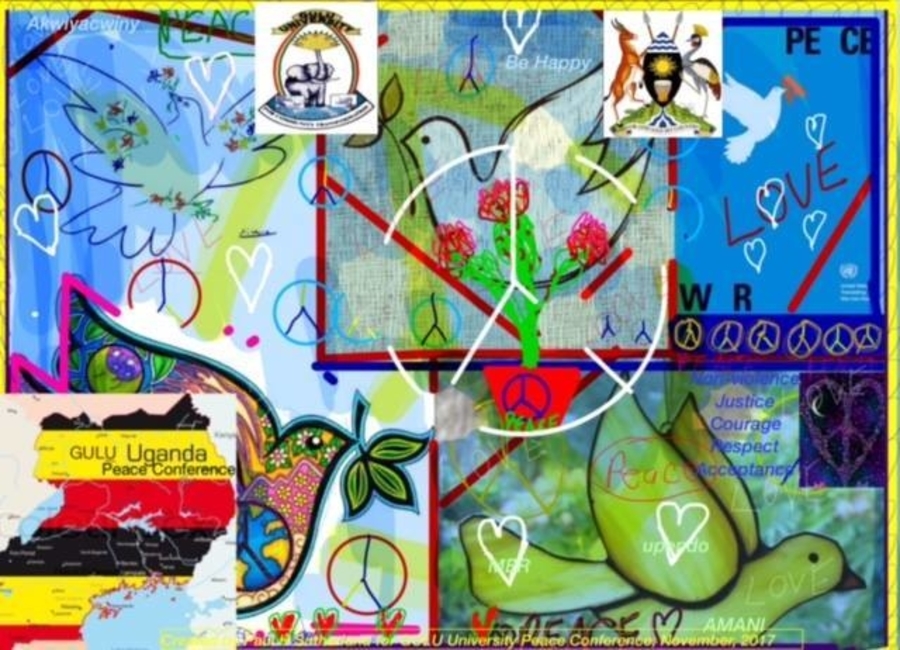
On that brief background,we would like to organize a two day Northern Uganda Peace Conference under the theme; “post conflict recovery in northern Uganda, assessing the past and reinventing the future” with the Objective of assessing the extent to which post conflict recovery has contributed to development in Northern Uganda so as to develop approaches that can be explored by different stakeholders in enhancing negotiation and dialogue as superior tools of peace building, conflict resolution and management for purposes of creating an enabling investments environment and also assessing the role that can be played by several stakeholders in making socio-economic development in a post conflict era a reality with core focus on the youth.
The conference also further seeks to put youth at the center of peace building and negotiations and to develop alternative development policies, programmes and initiatives that can be explored by the government, international development agencies, local government councils, NGOs, and civil society organizations among others.
The conference shall be organized under the following themes:
1. Civil society, peace and development in northern Uganda-assessing the contribution of donor and foreign aid in the post conflict recovery.
2. Socio-economic development and peace-the role of borderless leadership.
3. Education and peace building- invigorating the role of education system in enhancing peace, dialogue and negotiations as a means to conflict mediation, resolution and management.
4. Religion and peace-assessing the contribution of religious beliefs to violent extremism and radicalism.
5. Culture and peace-assessing its contribution and impact to peaceful co-existence.
6. Home and education environments as breeding grounds for peaceful co-existence.
7. The role of private sector in enhancing peace and development in a post conflict setting.
8. The role of local government in fostering peace and development.
9. Peace and multiparty democracy-assessing the contribution of different political actors in enhancing peace and development in northern Uganda.
Participants: the conference targets and is expected to draw a diverse range of participants from students’ bodies, such as Students’ leaders from primary schools, secondary, tertiary and university institutions, Local government councils such as LCI, LCII, LCIII and LCV, Members of parliament, Police and security, Youth leaders at the youth structures (National Youth Council), Civil society actors , Cultural leaders, Religious leaders, Media , School and tertiary institution heads and representatives of different political parties.






 Sign in with Facebook
G Sign in with Google
Sign in with Facebook
G Sign in with Google
 Sign in with Apple